The Lee-Enfield ENFORCER Police Sniper Rifle
Please be aware that some specialist imagery may take time to load.
This site is for dedicated researchers and is best viewed on desk or laptop.
The particular rifle covered by this page is serial numbered 160.
Perusal of the PDF file, further down this page, that lists the Police Constabulary areas to which these weapons were despatched from the Royal Small Arms Factory at Enfield Lock, and the respective dates, will show that rifle no.160 went to Teeside Police on 25th. March 1974.
A total just short of 770 rifles were manufactured, although only 668 remained in the U.K. with just under one hundred being sold abroad to to four Asian and Far Eastern countries. Of the production of rifles for the U.K., 518 were distributed to Police Forces, sixteen did not survive testing at Enfield, and 134 were not actually completed, effectively remaining as spares.
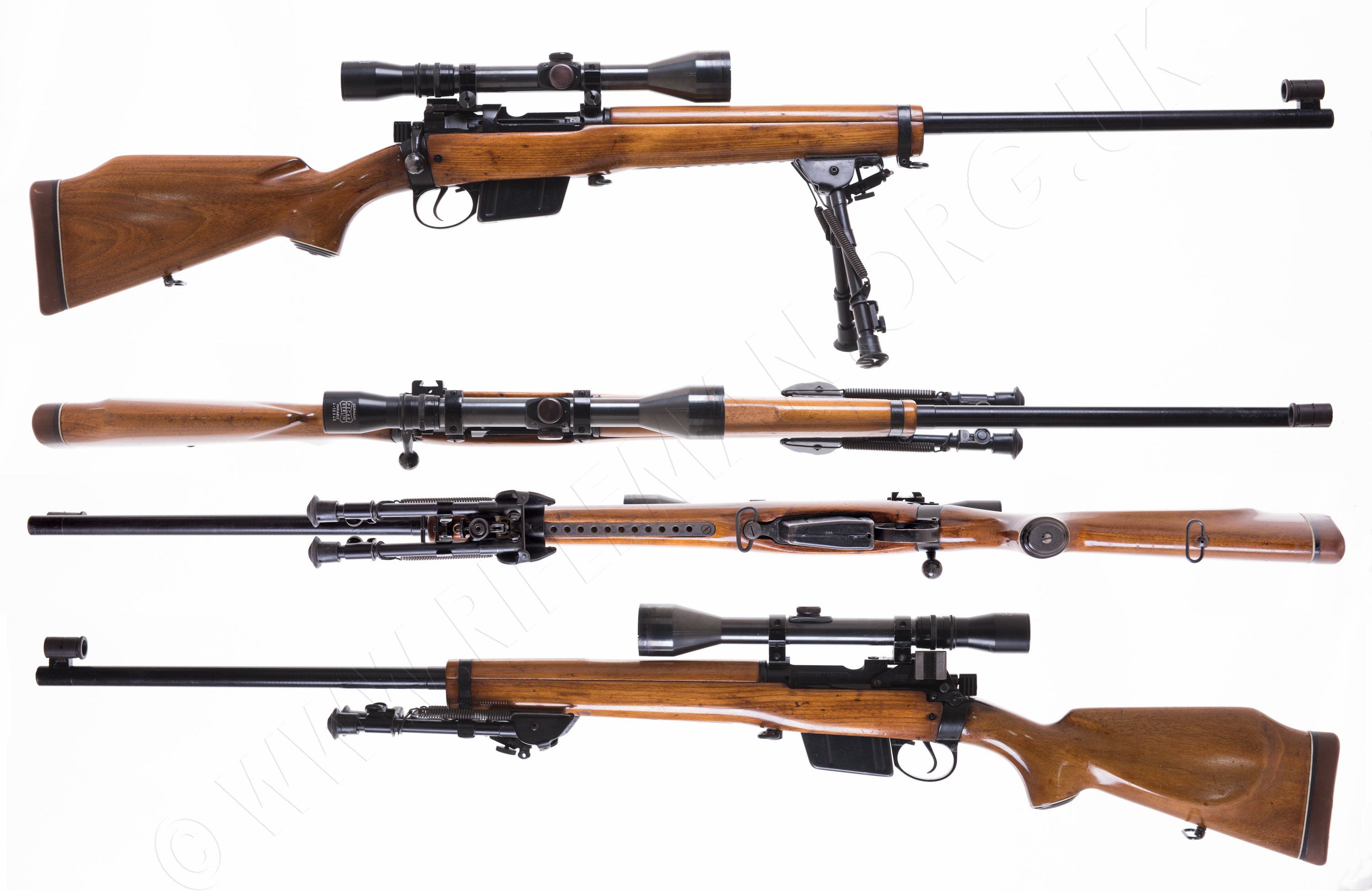
When the police rifles were taken out of service in the late 1990s, with the arrival of more modern types, many constabularies opted to have their retiring Enforcers destroyed. Approximately just half of the original production survived, making the remaining examples comparatively rare, with a small number being sold out to the civilian market. The majority spare parts sets remaining were sold off to Charwood Ordnance, who assembled and sold them with serial numbers believed to be those in the 700 range (see the listing further down this page).
There have, though, been a number of replicas put together by modifying No.4 design based rifles, including the L39A1, and some additional rifles were later assembled from spares, at least two by the workshops of the Charnwood Collection.
However, except for the Charnwood rifles assembled with original parts, replica rifles will be unlikely to have the correct engraving on the left-hand side of the action,
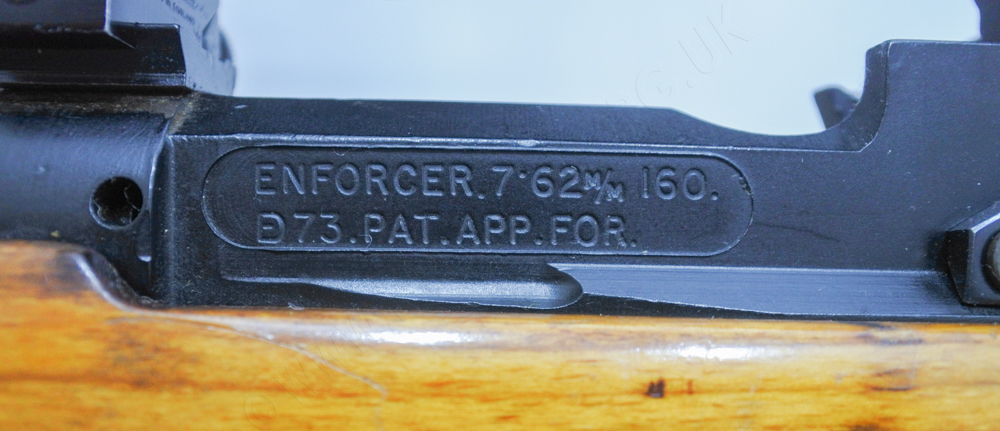
and neither would they have the unusual stamping of the patent application number
on the top of the barrel to the rear of the fore-sight mount.
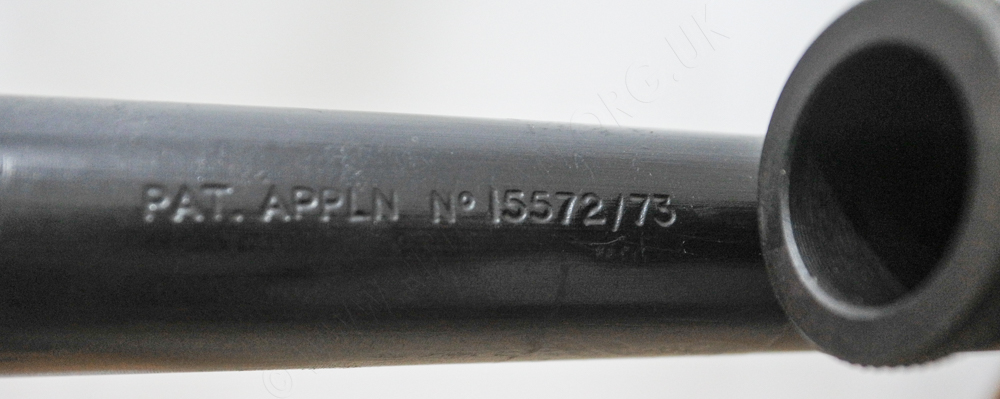
This reads:
" PAT. APPLN No. 15572/73"
It is understood to refer specifically to the rifling as in the following patent detail, and the system of producing the hammer forged barrels used on all Enfield manufactured rifles from the L39A1 to the Envoy. Whether the profile given in the diagram was precisely that eventually adopted on the mandrels is open to question.
The Patent No. GB1409331A was dated 28th. March 1974
subsequent to the application No.15572 of 30th. March 1973, by the Secretary of State for Defence.
RIFLING
Abstract
Riflings: Heading F3C [Also in Division B3]
A barrel 1 for a gun has a helical rifling formation on the internal surface thereof, the profile 2 of the rifling comprising arcs 3, 4, 5 and 6 of uniform and equal radii which have a common centre 8, and an equal number of chords 9, 10, 11 and 12, each arc being spaced from each adjacent arc by one of the chords. The arcs subtend equal angles at the centre of the barrel and the chords are of equal length. The perpendicular distance from the centre 8 to each arc is not less than 0À900 and not greater than 0À995 the length of the radius of each arc. Preferably there are an even number of arcs and chords. The rifling may be formed by a known broaching operation or by a cold swaging process using a mandrel. The latter may be made of hardened alloy-steel or tungsten-carbide and is positioned inside a smooth-bored barrel blank. Hammers act in unison to close the barrel blank inwards on to the mandrel, the barrel and the mandrel being slowly rotated relative to the hammers and the barrel being fed longitudinally over the mandrel during the process.
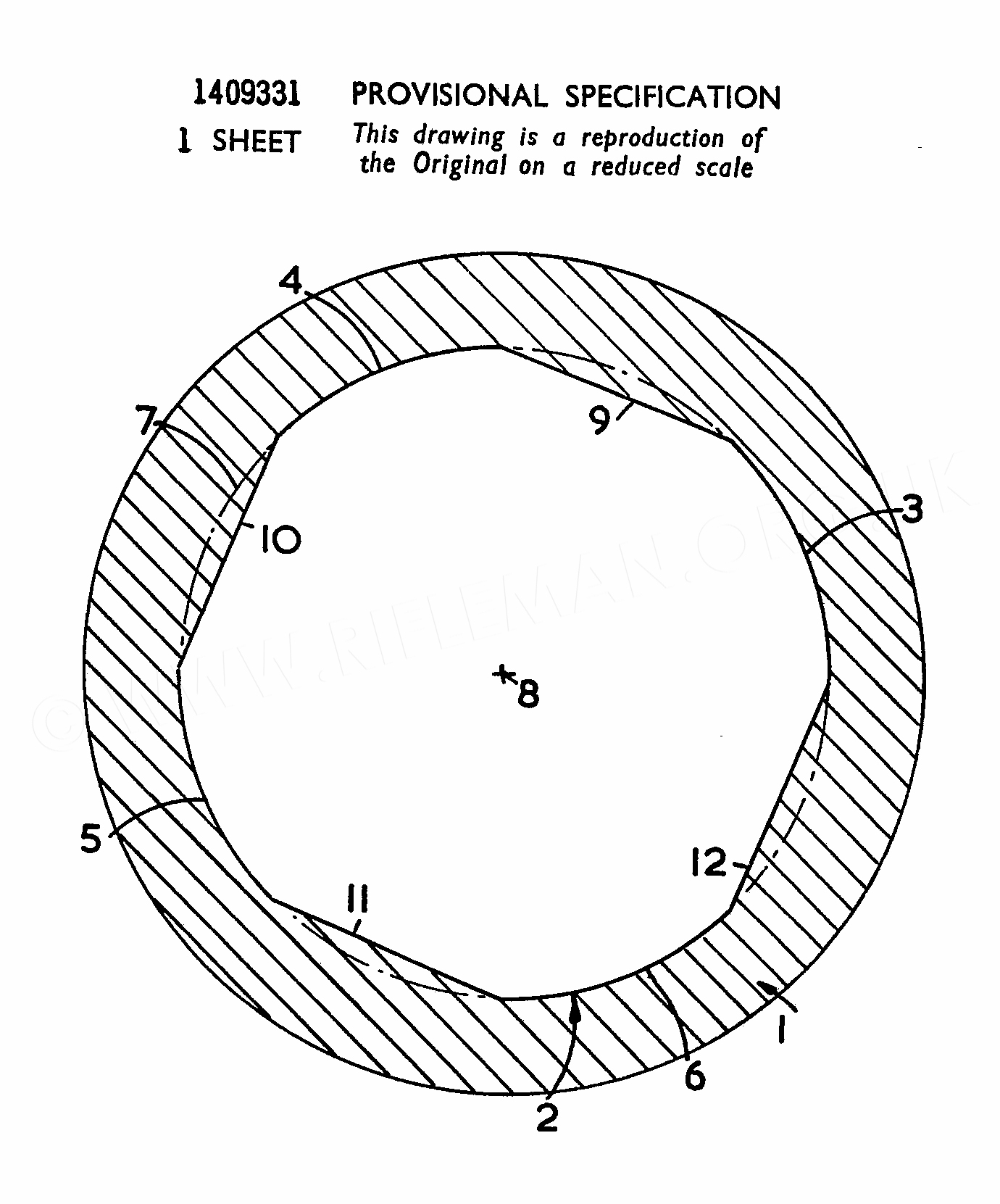
While the rifling profile in the rifle's muzzle is not identical to the drawing, the similarity is noticeable,
although the proportions of what might loosely be called 'land to groove' are at variance.
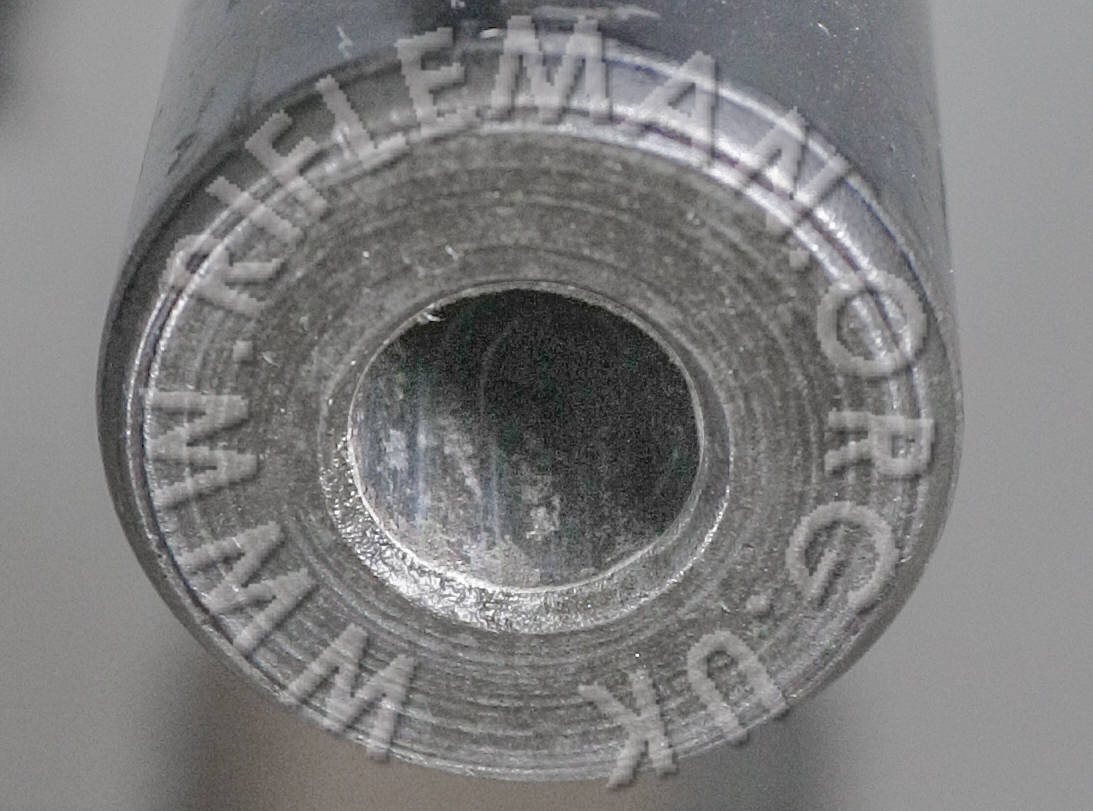
There is a noticeable difference between this rifling in the Enforcer,
and that used in the L39A1 an Envoy barrels, which use a narrow prominent land.
_______________________
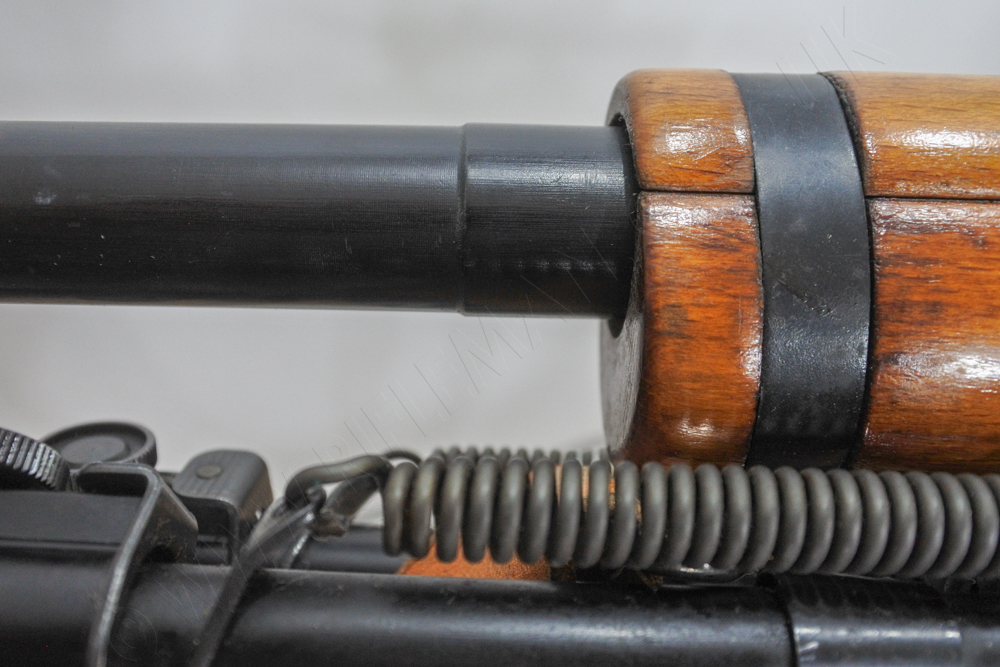
Note that, unlike the L42A1 sniper rifle or the Envoy civilian target rifle, the barrel has a small shoulder, just ahead of the fore-end nose, reducing the barrel diameter slightly.
The barrel has a more than usually marked taper towards the muzzle. This is a factory modification because the barrel retains the correct patent application number stamped behind the fore-sight mount.
The barrel diameter in front of the fore-end is 21.75 mm, and the shoulder reduces this to 21.61mm, and the taper takes it to 19.6 mm at the muzzle.
The barrel of the L42A1 is nearer parallel at 21.9 in front of the fore-end, and 20.05mm bhind the fore-sight, where the diameter is reduced to 17.08 to the muzzle to accommodate the sleeve for the fore-sight block. The barrels of the L39A1 and the trials XL39, and the Enfield Envoy civilian target model, are also each very closely dimensioned to that of the L42A1.
An information sheet on the rifle gave a basic specification.
The Royal Small Arms Factory at Enfield produced a small brochure of their Enforcer.
And a later brochure included "Additional Features" on the back page.
Below is a list of those rifle serial numbers for which the date of issue
to the various police constabularies has been recorded - UPDATED August 2026
If you are aware of others we would be grateful to hear so they may be added.
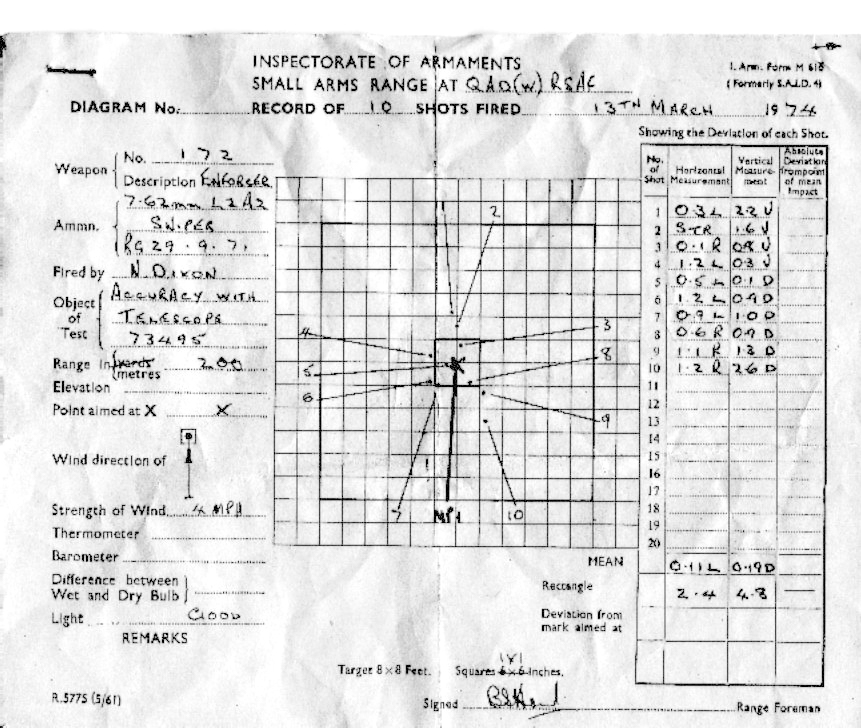
An original ten-round group test diagram fired in mid-March 1974, using rifle s/no. 172, at the Royal Small Arms Factory range in a 4mph following wind to check accuracy with the telescope. The group is just under 5" vertically and only 2.5" in azimuth.
We have had sight of an equivalent diagram for rifle s/no. 320 in mid-June of the same year, in an 8mph following breeze, that achieved a group with only an approximate 3" vertical dispersion and 2.5" in azimuth. This equates to little over one minute of angle at 200 metres.
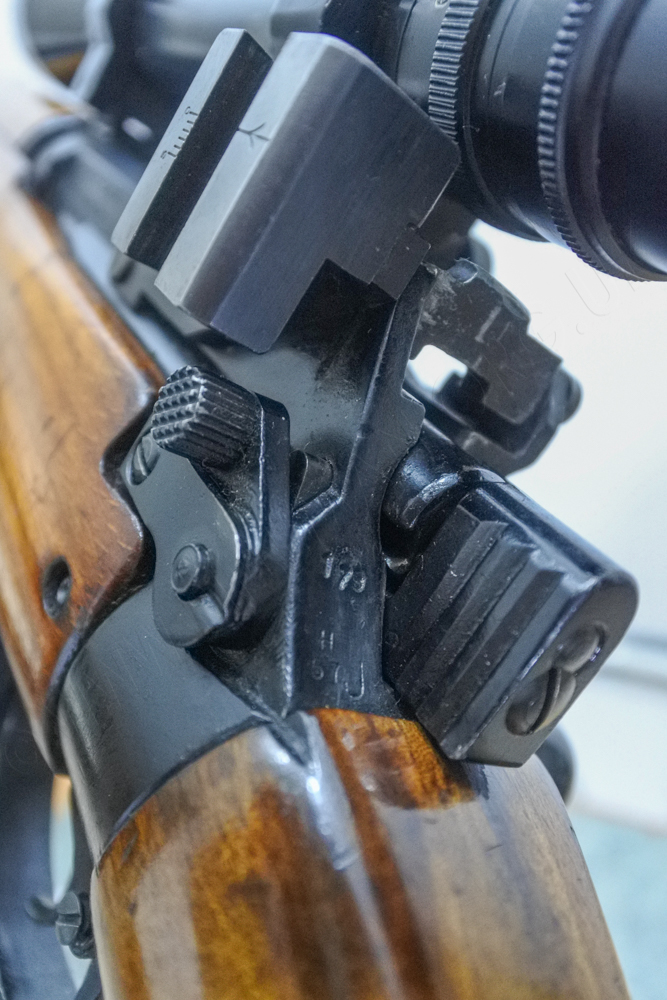
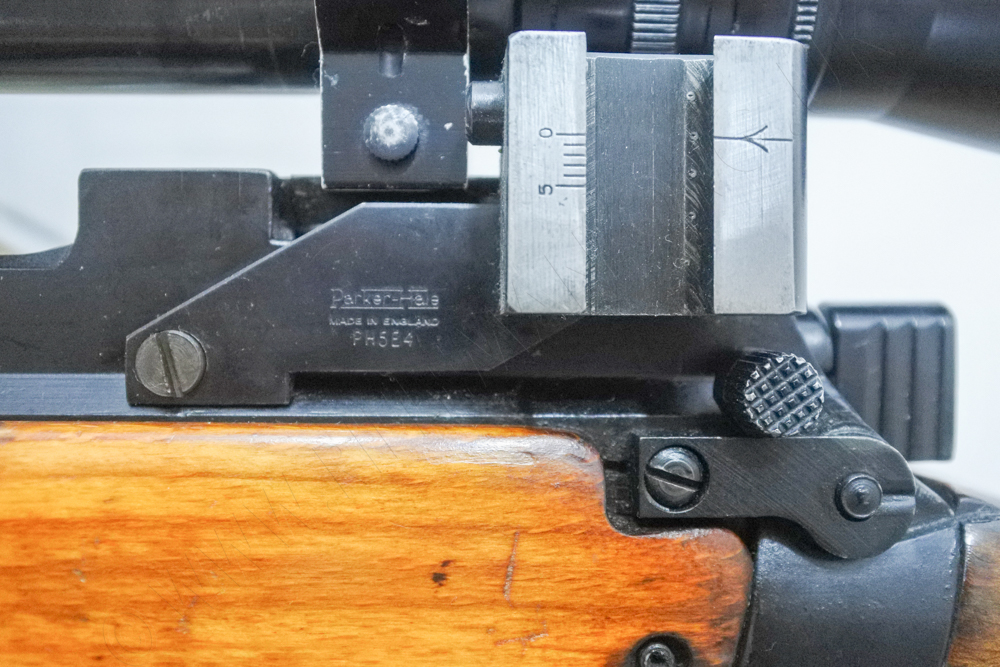
The additionally chequered and milled safety catch below the PH 5E4 rear aperture sight mount, and the identifying stamps on the action body's left rear face above the butt-socket.
The familiar three-finger-grooved cocking piece in the uncocked forward position.
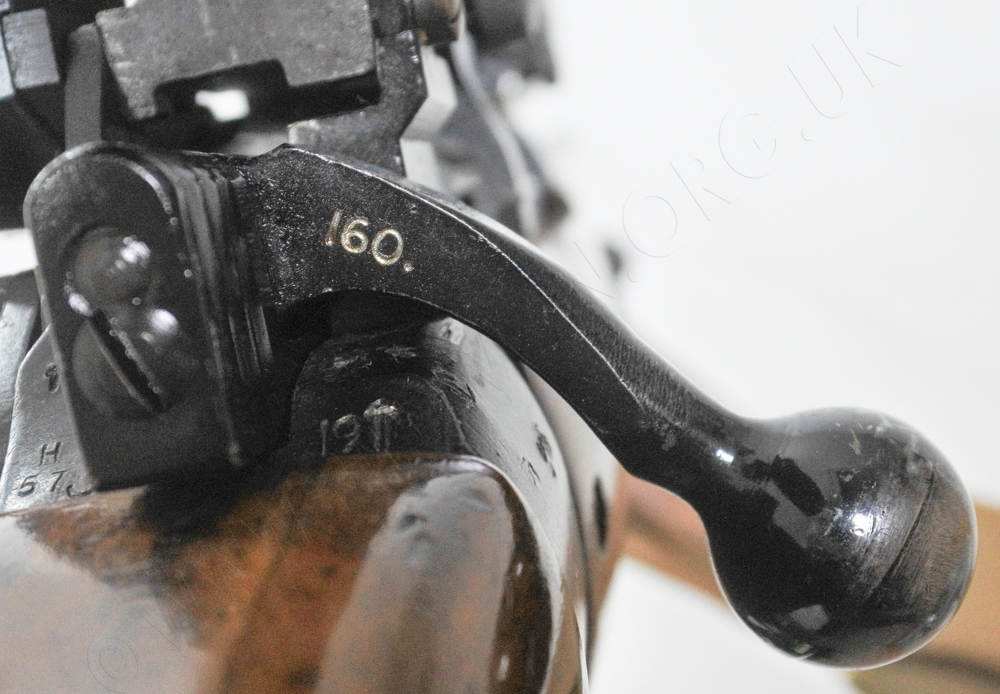
The matching serial number on the bolt handle.
The rear of the cocking-piece showing the tail end of the striker and its locking screw.
The Parker-Hale Model PH5E4 aperture sight mount was often retained on the rifle when the telescope was mounted, with the elevation slide necessarily removed to accommodate the telescope.
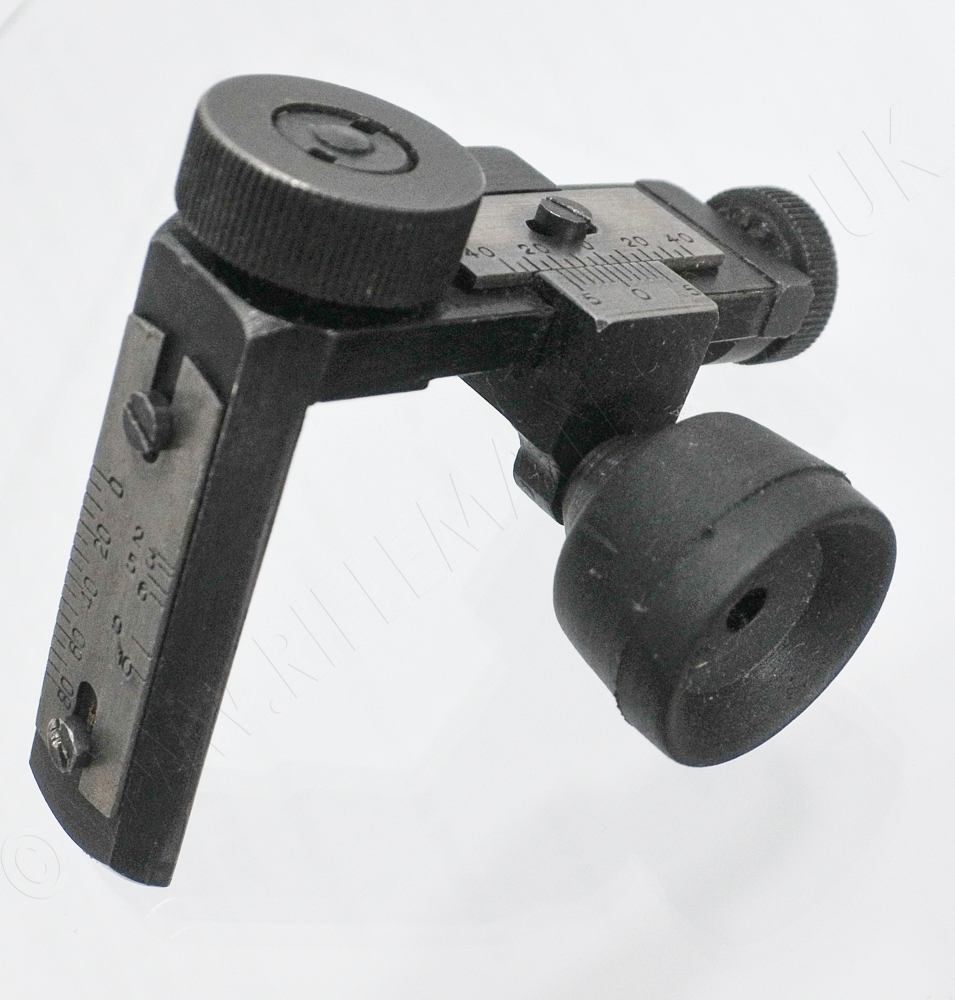
The separated upper section of the rear-sight showing the vertical elevation slide and the horizontal windage/azimuth slide with the eye-piece fitted with a rubber shade.
This close-up shot more clearly shows the diameter reducing shoulder ahead of the nose of the fore-end furniture. This is generally only seen on the Enforcer barrels.
One spring and leg of the substantial retracted Harris bipod are just visible.
This can be more clearly seen in the four image zoomable photo at the top of the page.
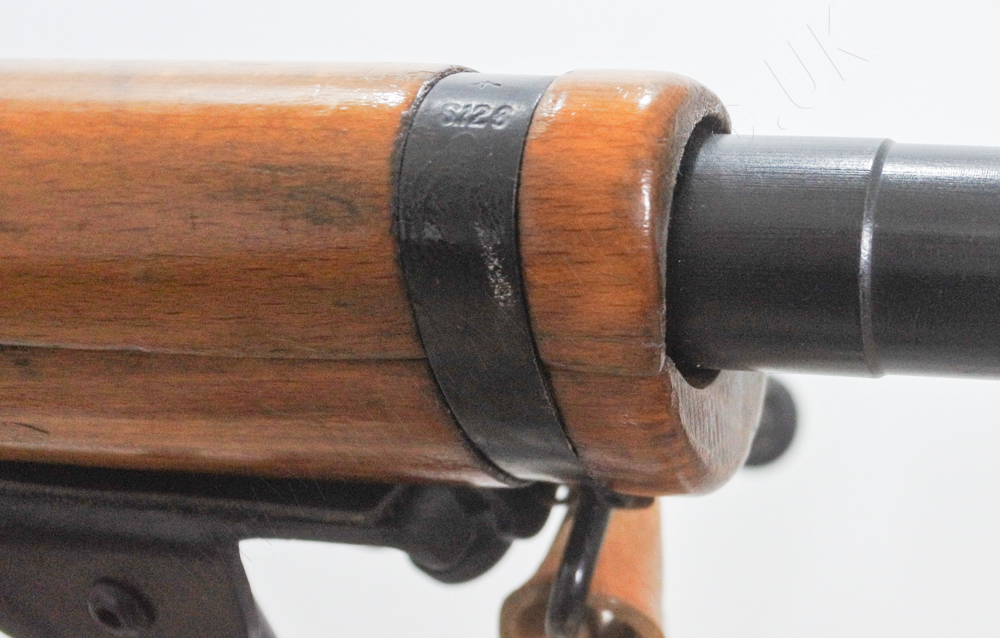
The front barrel band, with its manufacturer's code S125
is not unreasonably of the company A. Wells & Co.,of Walthamstow,
only a short distance from Enfield on the opposite (Eastern) side of the river Lea valley.
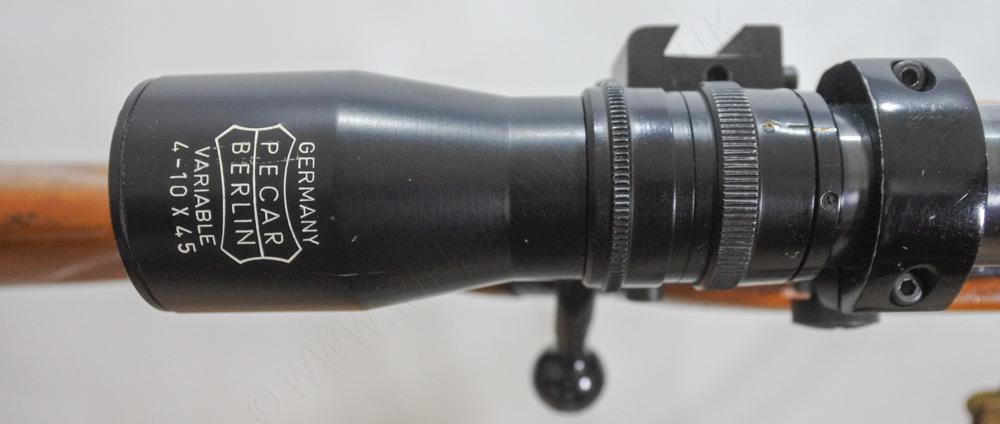
The rifles were fitted as standard with the Pecar4-10 x 45 variable zoom telescope.
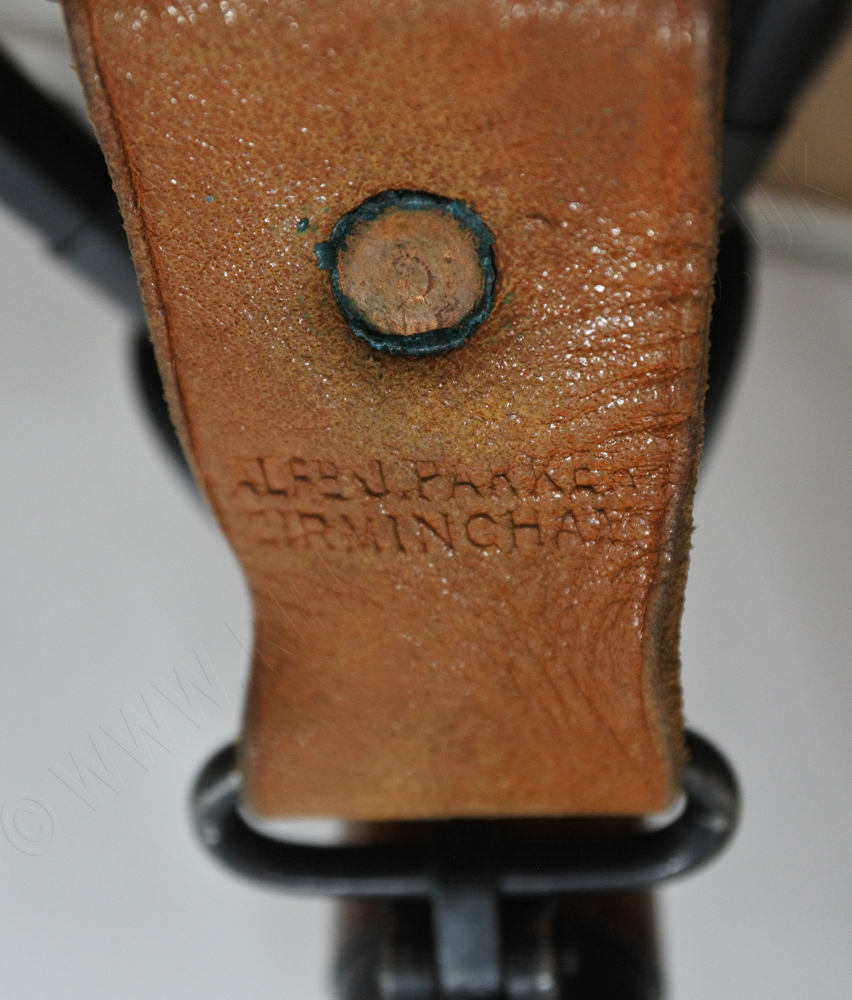
This rifle also has a two-point leather target sling that can be mounted between the trigger guard sling swivel and the front sling loop.
It is a product of the A.J. Parker company of Alfred Parker.
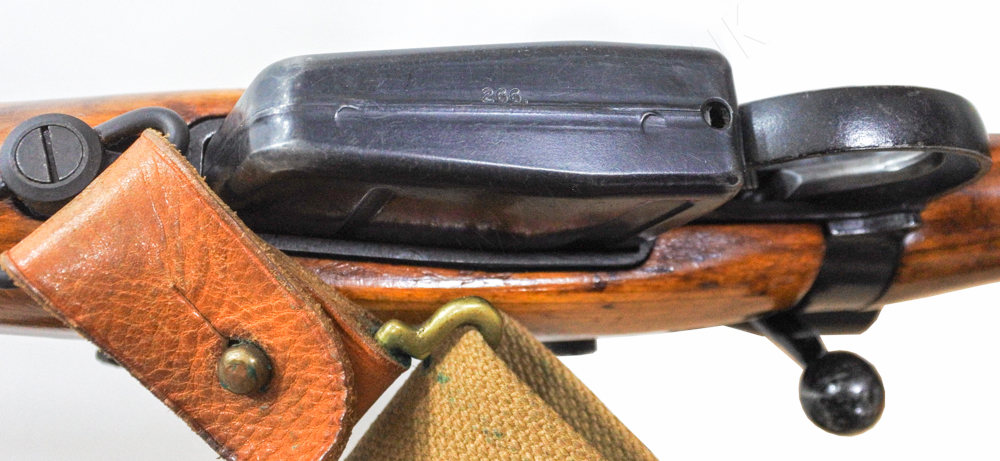
Not entirely unusual is that the rifle serial no.160 has the magazine that should be fitted to rifle s/no. 266.
Should you have that for 160 and wish to make a swap we would be delighted to hear from you!
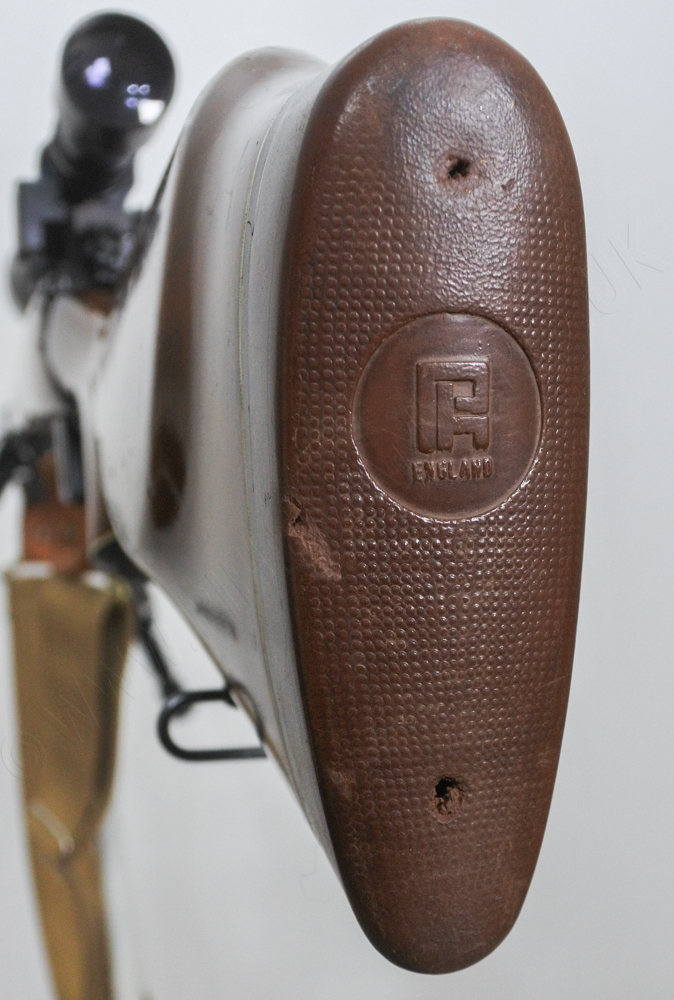
In fine sporting fashion, the butt's pistol-grip is based with a pleasing composite cap.
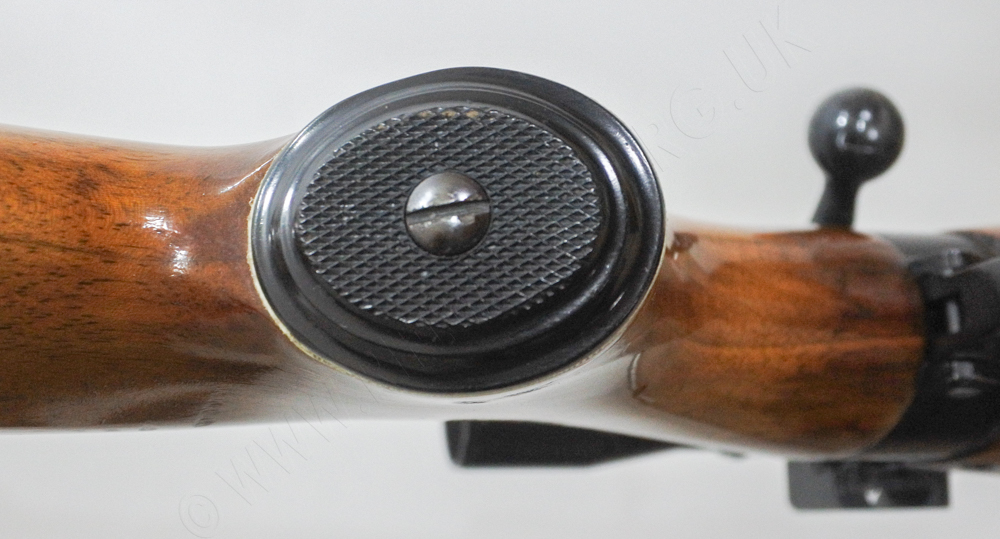
The Recoil reducing butt-pad is another product of the Parker-Hale company,
with their logo included in the moulding, and the assurance that it is English made.
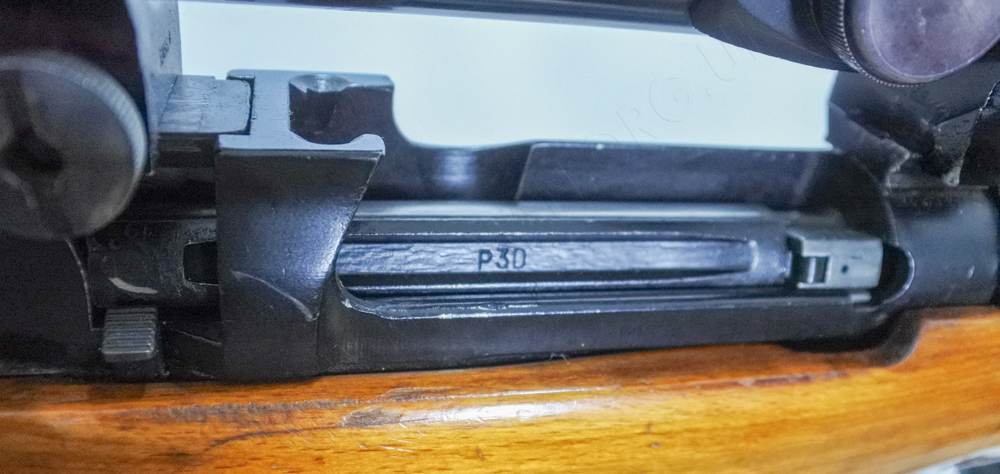
The milled groove in the bolt body's long lug carries the mark "P30".
If it is a manufacturer's code, there are no P prefixed codes in Skennerton's "Broad Arrow" listings.
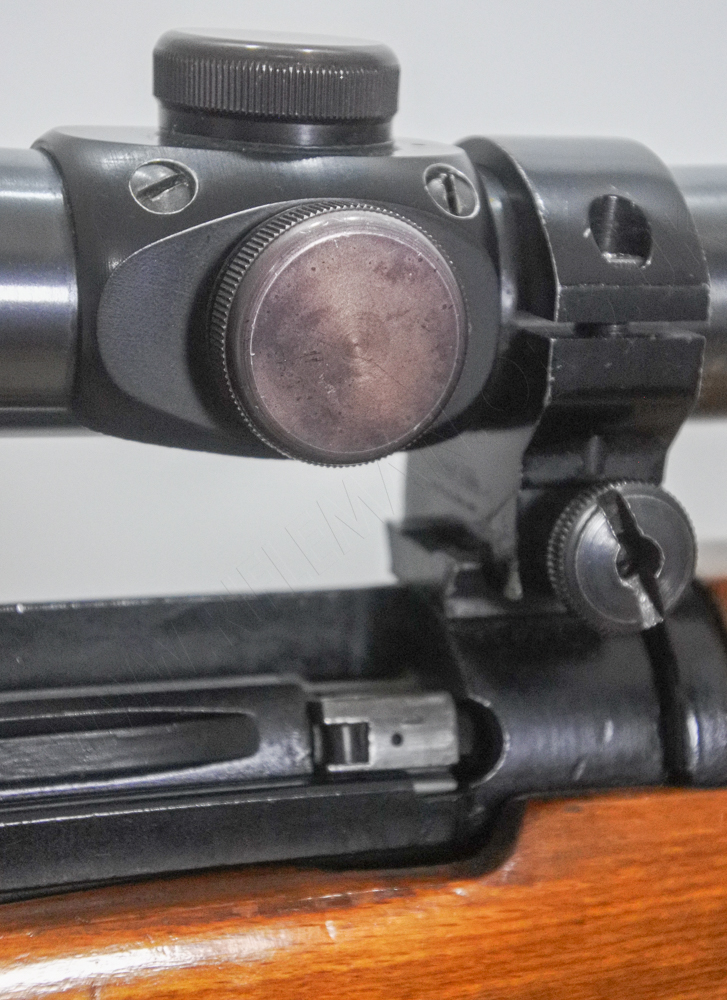
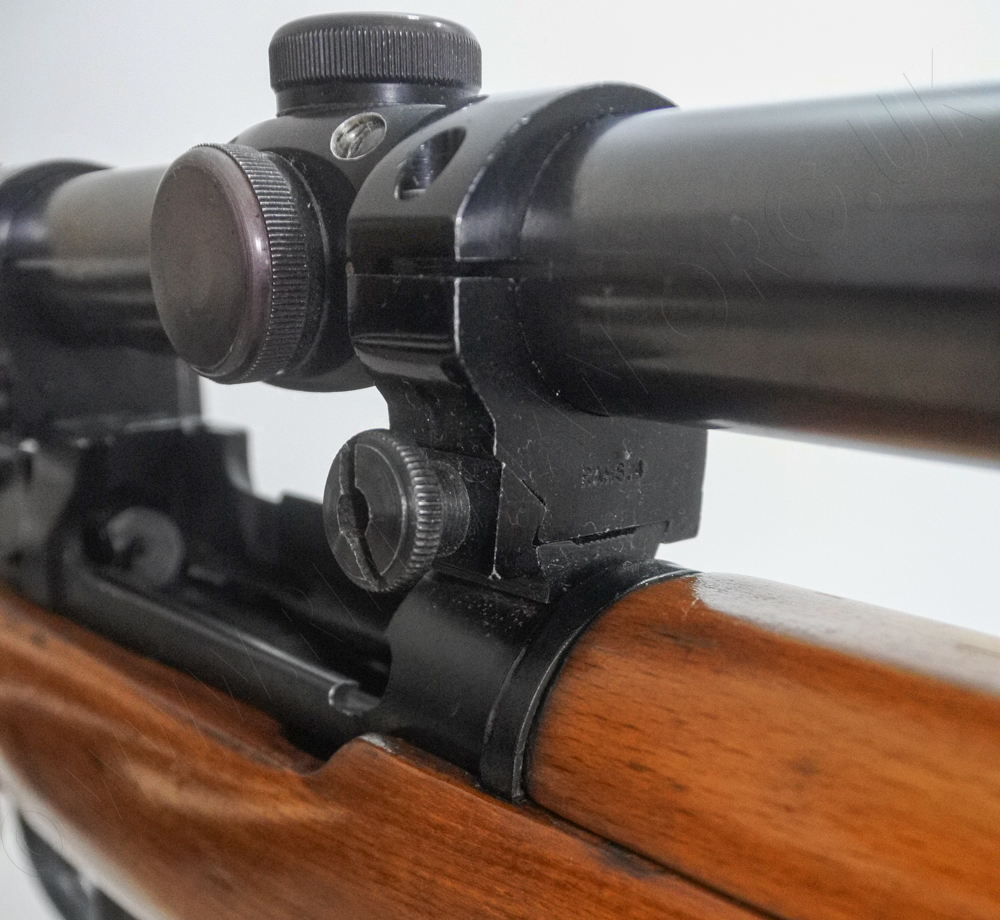
The telescope is mounted on the usual Parker-Hale RAHS.4 ring mounts.
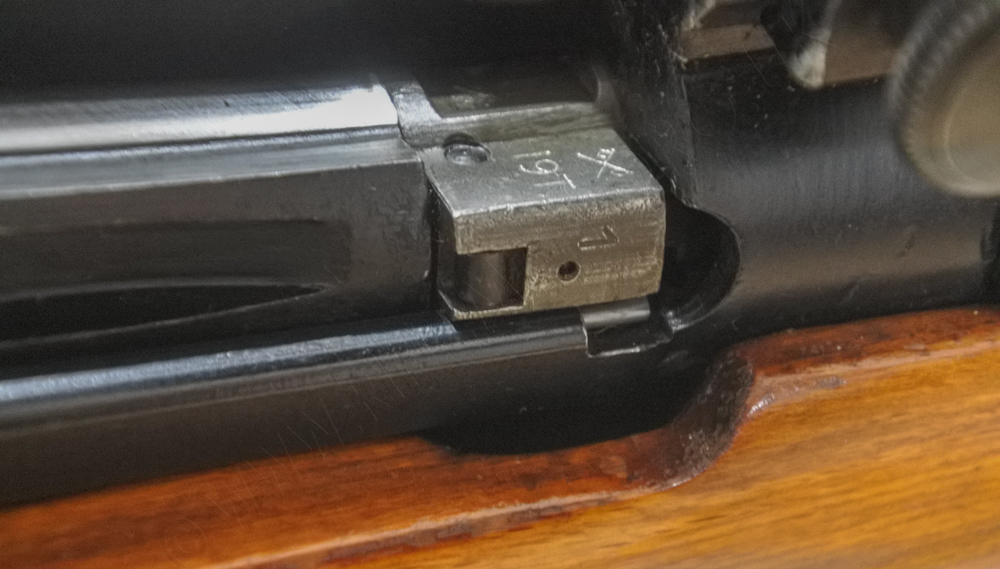
The bolt-head lug is engraved with the proof mark for 19 tons pressure and the crossed pennants. It is stamped with the number 1 on the radiussed outer face.
The breech and chamber entrance
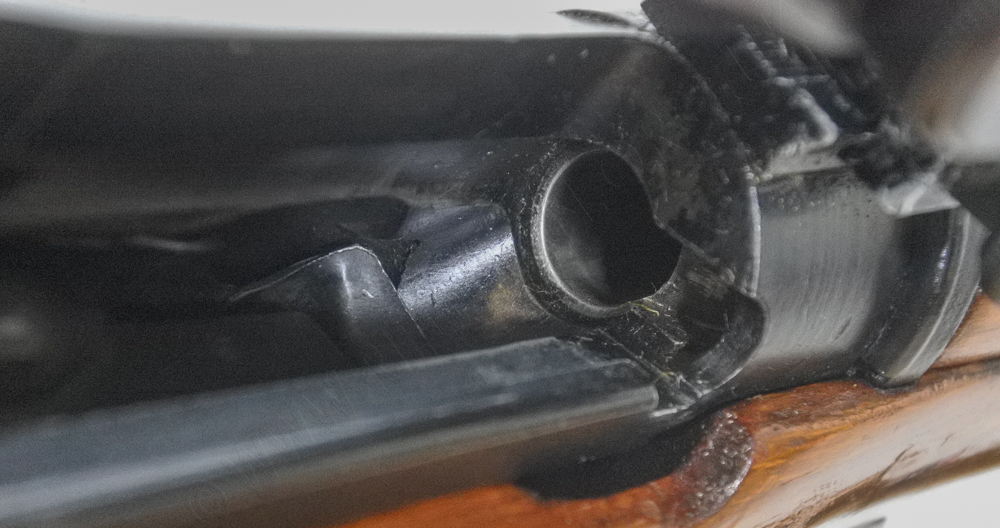
The bolt-head and extractor just in view under the out-of-use clip-loading charger-bridge that locates the forward end of the rear base for the ring-mount.
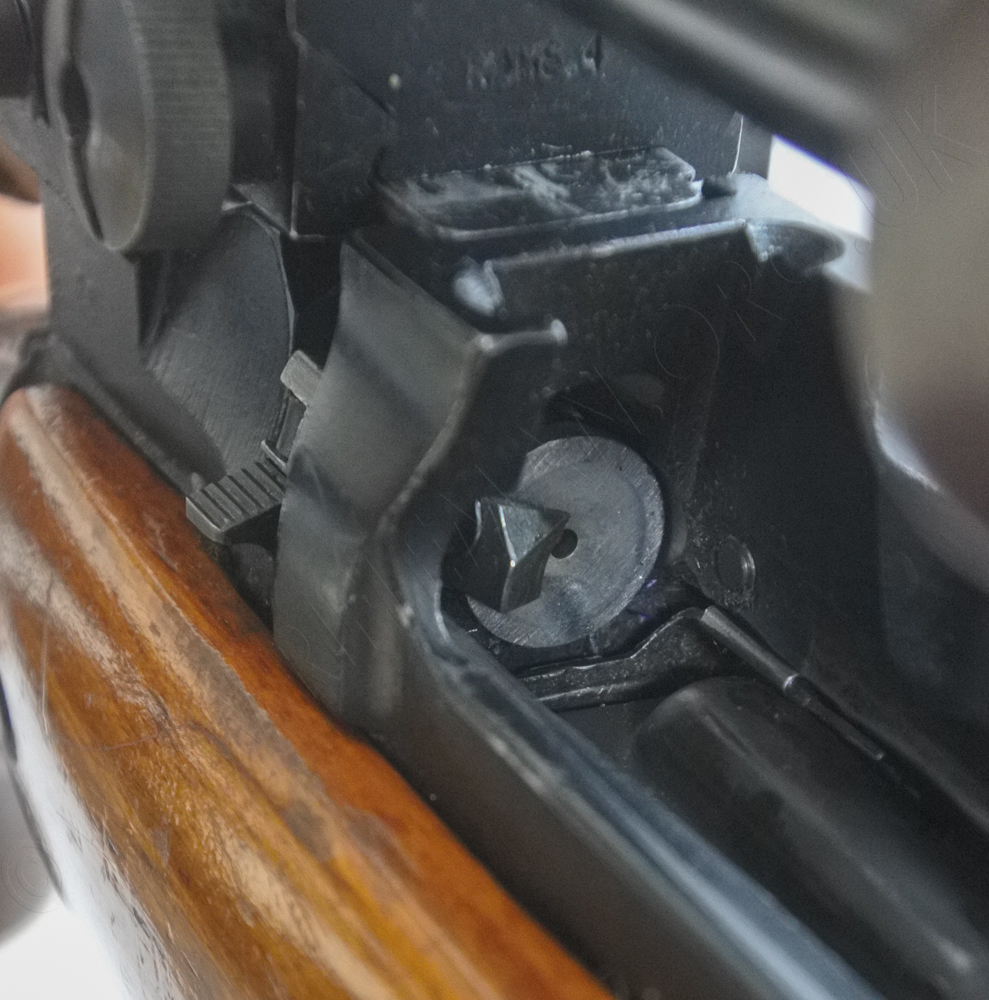
The Parker-Hale rear scope ring on their neatly designed BA 21 base that fits into the No.4 rifle leaf-sight pivot.
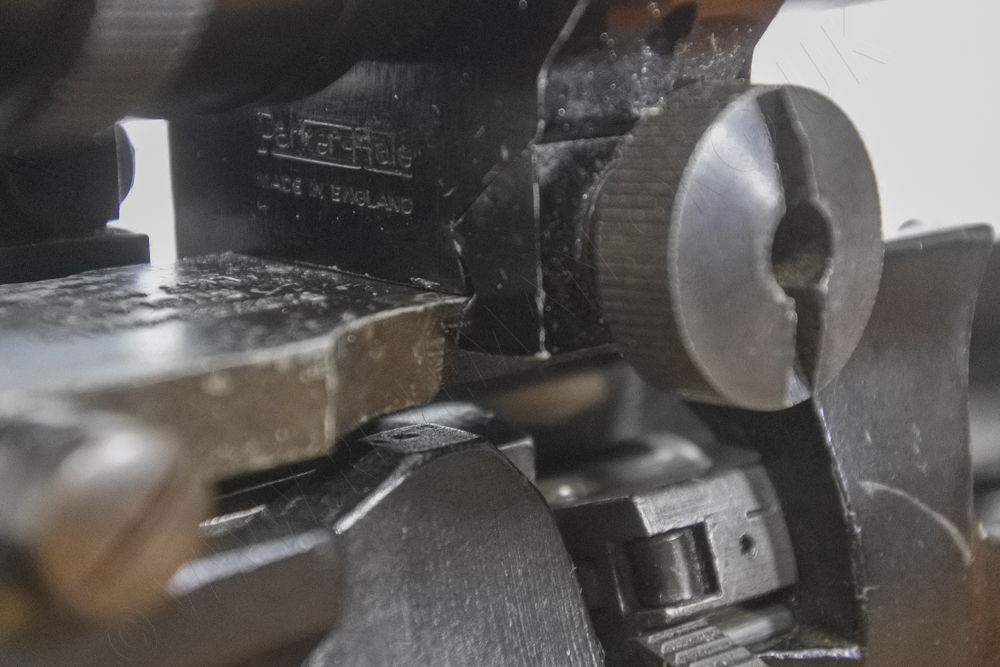
More clearly shown here.
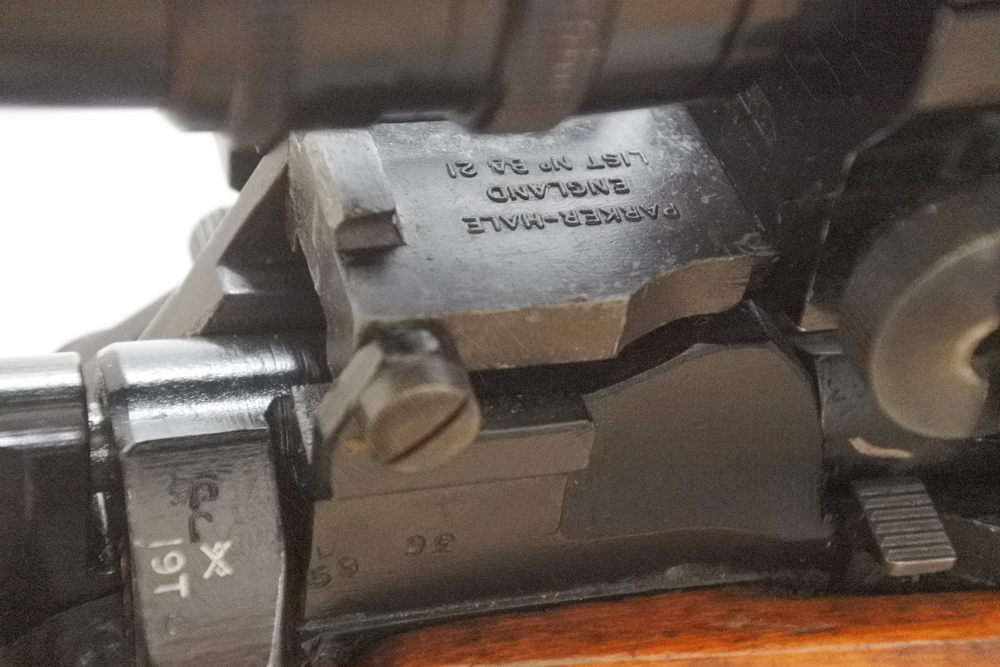
The ring mounts used are the Parker-Hale RAHS-4 high model to ensure the 'scope's objective bell clears the fore-end's upper hand-guard.
Despite these high mounts, the top of the hand-guard had to be planed off flat along its rearmost half. Again, this is visible in the four-shot image at the top of the page.
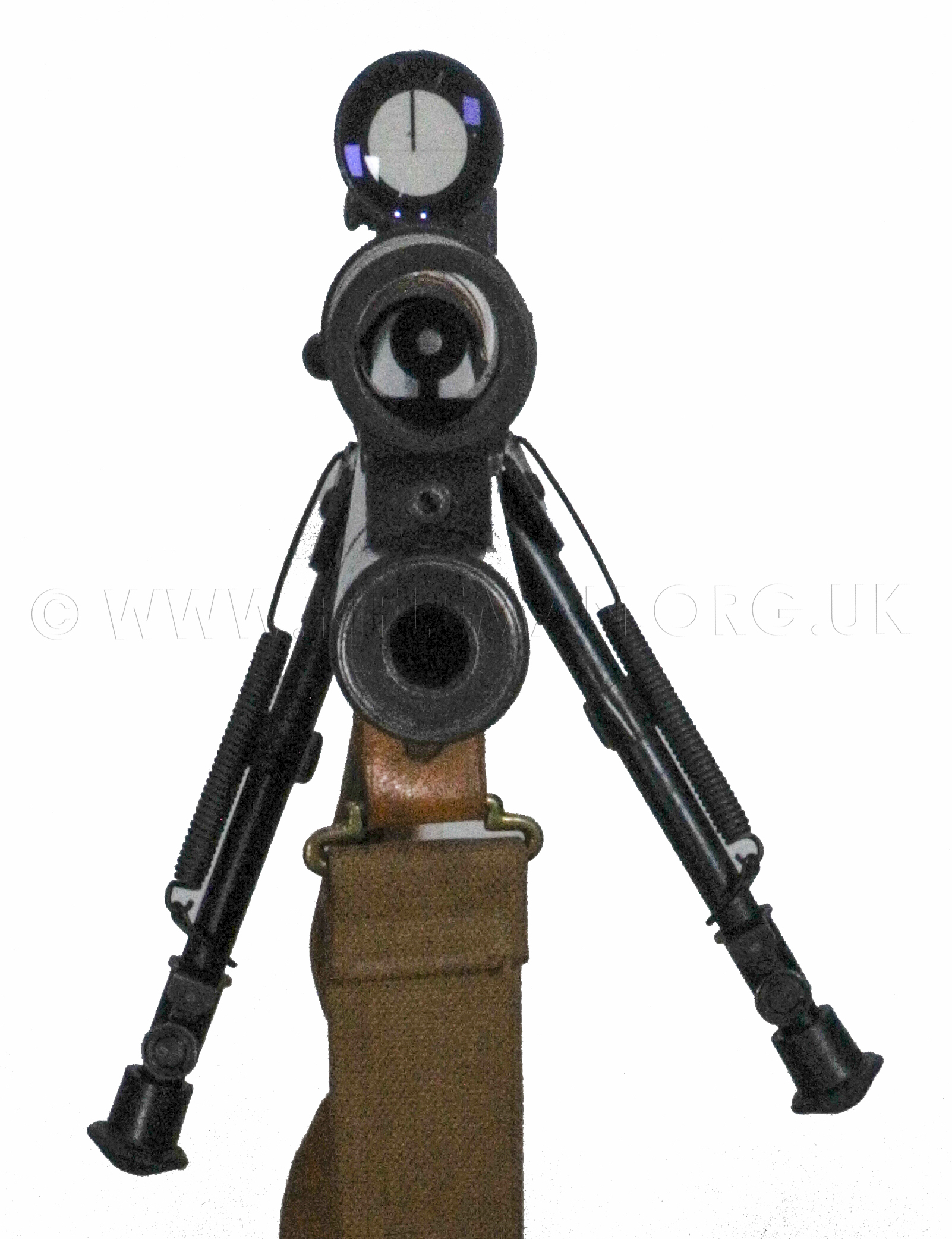
The business end.
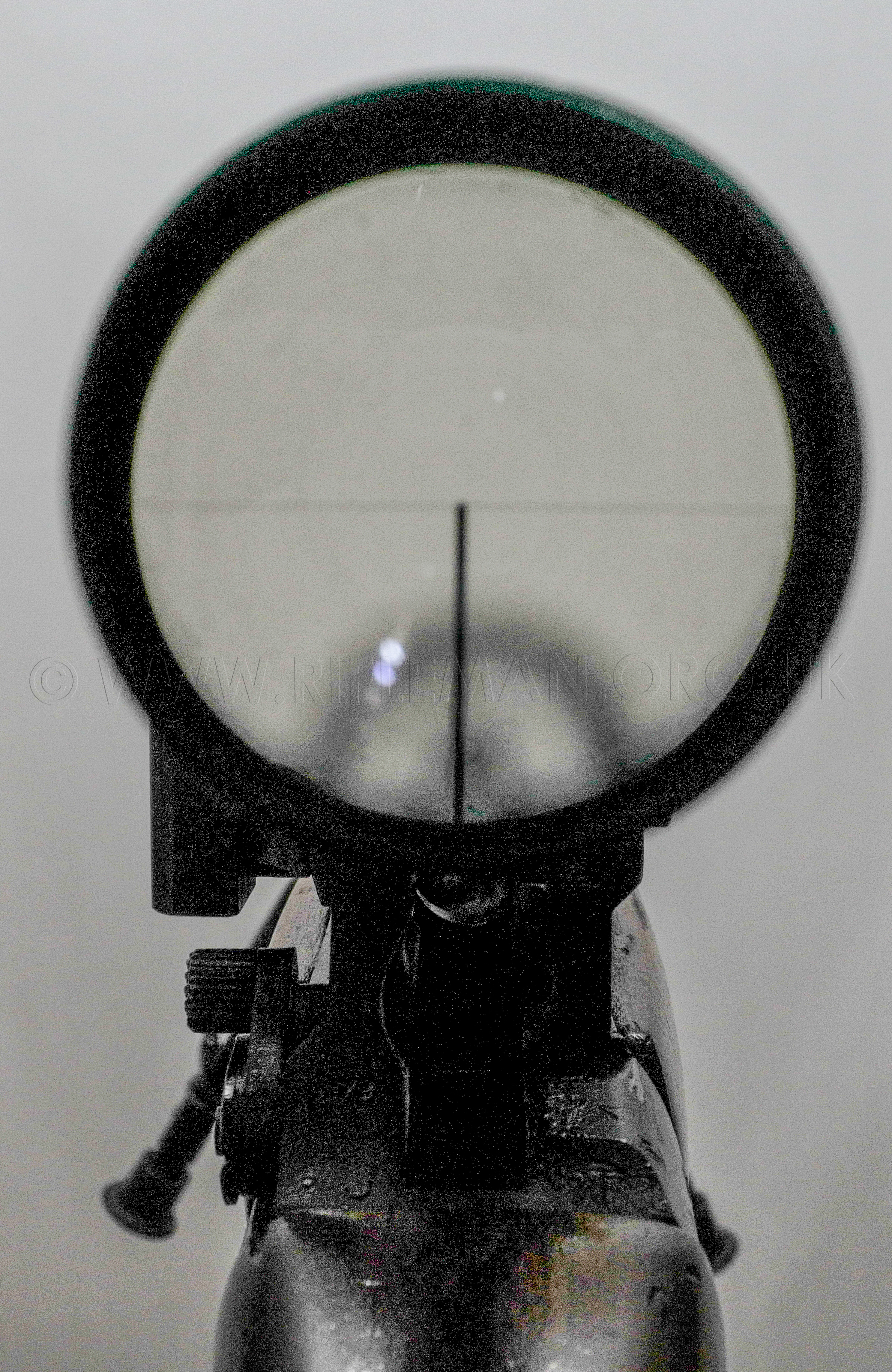
And the reticle
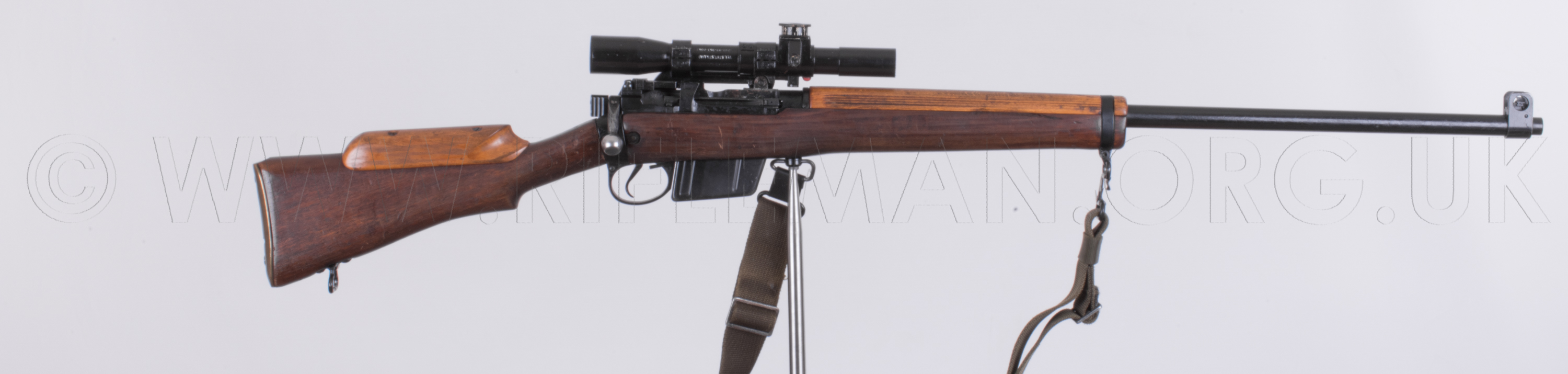
The Enforcer Sniper rifles are rarer than No4T & L42A1 rifles because of the small quantities manufactured (767) and that around 50% of those issued were destroyed.
Showing the Lee-Enfield L42A1 sniper rifle from which the "Enforcer" was developed for civilian use.
The detail and imagery for the latter rifle is waiting an update on the linked page.
See also: the closely associated Enfield Envoy and the L39A1 target rifles.